Within Newfoundland UFOs
What Did Pilots See Over Labrador?
Early Cold War pilots and passengers reported unusual formations near Labrador, where busy transatlantic routes created both credible observations and ample
On this page
- The 1954 BOAC formation encounter
- Why experienced aircrew testimony matters
- Navigation, distance and atmospheric uncertainties
Page outline Jump by section
Introduction
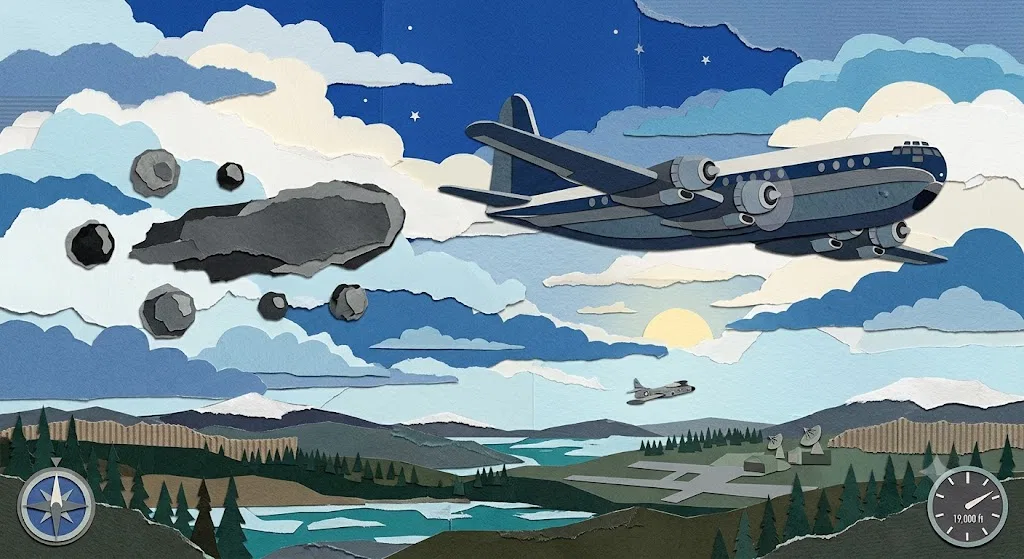
The best-known Labrador aircrew UFO encounter occurred on 29 June 1954, when a British Overseas Airways Corporation Boeing Stratocruiser flying from New York to London reported a large, dark, shape-changing form accompanied by six smaller objects. Captain James Howard, several crew members and some passengers watched the formation from cruising altitude as the aircraft approached Goose Bay. The observation lasted roughly 18 to 22 minutes and covered about 85 nautical miles before the objects faded from view as a United States Air Force interceptor approached.[nicap.org]nicap.orgBOA C Case: UFOS Follow British Airliner Over LabradorBOA C Case: UFOS Follow British Airliner Over Labrador
The case matters because it combines professional witnesses, prolonged observation and immediate military involvement. It is not, however, a confirmed sighting of an extraordinary craft. No photograph was taken, no dependable radar detection of the reported formation survives, and later investigators found that unusual atmospheric refraction could account for many features of the display. The fairest judgement is that the crew genuinely saw something striking, but that its distance, size and physical nature were never established.[files.ncas.org]files.ncas.orgCondon Report, Sec III, Chapter 5: Optical & Radar AnalysisCondon Report, Sec III, Chapter 5: Optical & Radar Analysis
The 1954 BOAC formation encounter
Howard’s aircraft, BOAC Flight 510-196, left New York for London with a scheduled refuelling stop at Goose Bay. It was a Boeing 377 Stratocruiser, a large piston-engined airliner used on premium transatlantic services before long-range jets took over. After crossing the St Lawrence near Sept-Îles—then commonly called Seven Islands—the aircraft continued north-east at approximately 19,000 feet and about 230 knots. Broken stratocumulus lay below, while the sky ahead was clear and the evening sun was low to the north-west.[nicap.org]nicap.orgBOA C Case: UFOS Follow British Airliner Over LabradorBOA C Case: UFOS Follow British Airliner Over Labrador
Howard and his co-pilot first noticed what appeared to be objects moving on a broadly parallel course off the aircraft’s port side. The initial impression was that they were below the Stratocruiser, intermittently visible around or beneath the cloud layer. As the aircraft continued towards Labrador, the apparent formation became clearer: one large dark form and about six smaller, roughly globular forms arranged around it.[nicap.org]nicap.orgBOA C Case: UFOS Follow British Airliner Over LabradorBOA C Case: UFOS Follow British Airliner Over Labrador
The large form did not retain a simple outline. Howard compared its changing appearance to a swarm of bees and later produced sketches showing wedge-like, elongated and irregular configurations. The smaller objects appeared to alter position, sometimes distributed in front of the main form and sometimes behind it. Witnesses described the shapes as grey or dark, opaque and sharply outlined against a bright part of the sky. No exhaust, flames or navigation lights were reported.[nicap.org]nicap.orgBOA C Case: UFOS Follow British Airliner Over LabradorBOA C Case: UFOS Follow British Airliner Over Labrador
This changing geometry became the most memorable feature of the case. It also makes the report difficult to interpret. A formation of separate solid aircraft would have needed to rearrange itself repeatedly while maintaining an almost constant bearing from the Stratocruiser. Yet an optical image broken into several fragments by an uneven atmospheric layer could also appear to split, combine and change shape without any physical objects performing those movements.
After several minutes, the crew contacted Goose Bay. Controllers arranged for a radar-equipped F-94 interceptor already in the area to approach the airliner. Howard later recalled speaking directly to its pilot, who reported radar contact with the Stratocruiser at a range of about 20 miles. As the fighter closed, the smaller forms seemed to converge on or disappear into the larger one; the main form then appeared to shrink and vanish while remaining on much the same bearing.[nicap.org]nicap.orgBOA C Case: UFOS Follow British Airliner Over LabradorBOA C Case: UFOS Follow British Airliner Over Labrador
Popular retellings sometimes claim that military radar tracked the mysterious objects or that the fighter obtained an airborne radar lock. The contemporary narrative available through Howard’s account does not support that stronger version. The F-94 crew reported contact with the BOAC airliner, not clearly with the formation, while Goose Bay had limited short-range airfield radar. The later University of Colorado review explicitly stated that no radar contact with the reported UFO was made.[nicap.org]nicap.orgBOA C Case: UFOS Follow British Airliner Over LabradorBOA C Case: UFOS Follow British Airliner Over Labrador
Howard landed at Goose Bay shortly afterwards and said that United States Air Force intelligence personnel questioned the crew. The existence of questioning is unsurprising. Labrador was a strategically sensitive aviation and air-defence region, so an unidentified formation near a civil airway and military installations warranted attention regardless of whether officials suspected aircraft, balloons, atmospheric effects or something more unusual.
Why Labrador produced credible witnesses
The encounter was not simply a random sighting over empty country. Goose Bay had been developed during the Second World War as a staging and refuelling base for aircraft crossing the North Atlantic. Between 1942 and 1945, approximately 22,500 Canadian- and American-built fighters and bombers passed through on their way to Europe. Its location continued to matter during the early Cold War, when radar sites and interceptor-control facilities were established across Newfoundland and the Labrador coast.[Canada]canada.caHistory - 5 Wing Goose Bay- Royal Canadian Air Force - Canada.ca…
By 1954, Labrador airspace brought together civilian transatlantic airliners, Canadian and American military aircraft, weather services, navigation facilities and developing continental-defence networks. That concentration increased the chance that unusual observations would be made by trained personnel and reported promptly. It also increased the number of ordinary objects and operations that might be misidentified: military traffic, weather balloons, distant aircraft, cloud formations and optical effects near the horizon.
Howard was not an inexperienced traveller making a fleeting observation through a cabin window. He was a senior airline captain and former Royal Air Force pilot with extensive transatlantic experience. Other flight-deck personnel, cabin crew and passengers also observed at least part of the event. Their agreement that an unusual dark formation was visible makes simple invention or an isolated visual defect unlikely.[Caelestia]caelestia.beHOWARD, a highly respected former RAF Squadron Leader with 7500 hours commercial flying on 256 Atlantic crossings to his credit at the ti…
Experienced witnesses nevertheless face the same fundamental visual problem as anyone else: without a known distance, apparent size and speed are estimates rather than measurements. Pilots are especially skilled at identifying familiar aircraft and judging movement when there are recognisable reference points. They are less able to determine the scale of an unfamiliar silhouette against clear sky, particularly near the horizon or over broken cloud.
The description that the objects “paced” the airliner therefore requires caution. Because the formation stayed near a constant relative bearing, the crew interpreted it as moving alongside them. A very distant cloud, terrain image or mirage can behave in much the same way. Nearby roadside objects seem to rush past a moving car, while distant hills hardly shift; at aircraft altitude, an optical feature many miles away may appear to keep station for a prolonged period.
Navigation, distance and atmospheric uncertainties
The largest weakness in the case is the absence of reliable range information. Howard estimated that the formation might be about three to five miles away, but he acknowledged uncertainty. If the objects were at that distance, the large form would have been enormous. If they were much farther away, their physical dimensions and apparent movement would have been radically different. No triangulation was possible because all the principal witnesses were aboard the same aircraft.
The reported altitude was similarly inferred rather than measured. The objects initially appeared to be near or below cloud and later closer to the Stratocruiser’s level. Yet apparent relationships between a distant image and scattered cloud can be deceptive. A dark shape visible through gaps may seem embedded in the cloud layer even when it is a much more distant feature.
Lighting conditions were particularly important. The objects were seen against a bright evening sky, fairly close in angle to the low sun. Dark terrain, cloud or another distant object viewed through a strong temperature inversion can be displaced, stretched or multiplied by refraction. A superior mirage occurs when light bends through layers of air with sharply different temperatures, making an image appear above its true position. Irregularities in the refracting layer can distort one source into several components and make outlines expand, contract or merge.
The atmospheric explanation was developed in the 1968 University of Colorado study of unidentified flying objects. Its optical analysis noted that the formation remained close to the aircraft’s horizontal plane, that the Stratocruiser held a steady altitude while the phenomenon stayed alongside it for roughly 85 nautical miles, and that the dark shapes appeared against a bright area near the setting sun. The investigators proposed that a thin temperature inversion above the aircraft might have reflected or refracted an image of dark terrain below.[files.ncas.org]files.ncas.orgCondon Report, Sec III, Chapter 5: Optical & Radar AnalysisCondon Report, Sec III, Chapter 5: Optical & Radar Analysis
That proposal explains several otherwise peculiar features:
- The main object’s outline could change because the refracting layer was uneven.
- Small “satellites” could be separated fragments of the same distorted image.
- A distant image could remain on a nearly constant bearing as the aircraft continued at steady altitude.
- Weakening refraction could make the smaller forms disappear and the main image contract gradually rather than accelerate away.
- Dark terrain or cloud seen against a bright sky would appear opaque without lights, exhaust or other aircraft details.
The Colorado investigators did not regard this as a complete demonstration. Meteorological observations over the relevant part of Labrador were too sparse to prove that the required inversion existed. They also recognised a difficult geometric problem: the mirage would have needed to remain visible in a limited direction for a long distance while apparently preserving its relationship to the moving aircraft. Their conclusion was therefore not that the case had been decisively solved, but that it was probably a rare natural optical phenomenon.[files.ncas.org]files.ncas.orgCondon Report, Sec III, Chapter 5: Optical & Radar AnalysisCondon Report, Sec III, Chapter 5: Optical & Radar Analysis
A later detailed reassessment by atmospheric-optics researcher Martin Shough also treated a complex mirage as the most plausible explanation, while stressing that the evidence remained incomplete. The proposed mechanism is stronger than loose suggestions that the crew merely saw a normal cloud, Venus or an ordinary aircraft. It addresses the changing shape, multiple components, steady bearing and gradual disappearance as parts of one optical event rather than explaining each detail separately.[Martin Shough]martinshough.comBOAC aircrew sightingMartin ShoughBOAC aircrew sighting, Labrador, Newfoundland, June 29, 1954November 13, 2009 — 3) mirage… Such a mirage would be formed…
What later reporting changed
The basic story has remained fairly stable: a BOAC crew saw one large and several smaller dark forms while approaching Goose Bay, watched them for an unusually long period, called air traffic control and was met by an interceptor. Howard repeated the account publicly and supplied drawings, giving later investigators more material than survives for many 1950s pilot sightings.[project1947.com]project1947.comfateIf the true explanation of this sighting could be established it would probably clear up much of the ‘flying saucer’ mystery…. See als…
Later retellings have nevertheless accumulated unsupported details. Claims that Goose Bay radar tracked the entire formation, that the interceptor locked on to it or that the objects fled at extraordinary speed are not established by the better-documented accounts. Howard said the main image dwindled and disappeared; he did not report a measured high-speed departure. The available fighter communication confirms that the interceptor detected the airliner, not necessarily the unexplained forms.[nicap.org]nicap.orgBOA C Case: UFOS Follow British Airliner Over LabradorBOA C Case: UFOS Follow British Airliner Over Labrador
There is also minor confusion over dating. Flight records and Howard’s narrative place the departure on 29 June 1954, with the sighting continuing around midnight in Greenwich Mean Time and the aircraft reaching Goose Bay early on 30 June. Some later summaries label it a 30 June event, while others use 29 June. This is largely a time-zone and midnight-crossing issue rather than evidence of conflicting incidents.
No later physical evidence has strengthened the extraordinary interpretation. There are no verified photographs, instrument recordings or independent ground observations that establish a structured craft. The surviving evidence remains mainly testimonial, supplemented by flight chronology, radio contact and Howard’s drawings. Conversely, the mirage explanation has gained detail but not conclusive proof because the precise atmospheric profile was not recorded.
How strong is the case?
The BOAC encounter is stronger than a brief anonymous light report. Multiple people saw the phenomenon; the principal witness was an experienced captain; the observation lasted many minutes; and the crew reported it while it was happening. Those features justify its continuing place in the UFO history of Newfoundland and Labrador.
Its evidential limits are equally important. The witnesses could not measure range or size, the formation was seen in conditions favourable to strong visual contrast and possible refraction, and no radar system is reliably documented as tracking the alleged objects. The apparent response to the approaching fighter may have been coincidence: a mirage layer could have weakened while the interceptor was closing, making the event seem reactive.
The most defensible classification is unresolved in a strict historical sense, but plausibly explained by an unusual atmospheric mirage. Calling it fully debunked would overstate the available weather evidence. Calling it a confirmed formation of unknown craft would ignore the lack of range data, radar corroboration and physical records.
Within the wider UFO history of Newfoundland and Labrador, the incident is valuable because it shows both why pilot testimony commands attention and why it cannot settle a case by itself. Labrador’s transatlantic routes placed skilled observers in clear, elevated viewing positions over a strategically important landscape. Those same routes also exposed them to unfamiliar combinations of horizon geometry, broken cloud, low sunlight and temperature layers. The 1954 encounter remains memorable not because it proves an extraordinary presence over Labrador, but because an impressive group of witnesses and a credible natural explanation can coexist without either producing absolute certainty.
Amazon book picks
Further Reading
Books and field guides related to What Did Pilots See Over Labrador?. Use these as the next step if you want deeper reading beyond the article.
The Report on Unidentified Flying Objects
Book Excerpt: ing can never be positively identified. It might have been a hallucination or it might have been some vehicle from outer sp...
The UFO Experience: A Scientific Inquiry
Cited by the New York Review of Books as "the best brief for visitation," this classic study presents an analysis of UFO reports and conc...
UFOs: Generals, Pilots, and Government Officials Go on the Re...
NEW YORK TIMES BESTSELLER • Impeccably researched, this riveting journalistic investigation separates fact from fiction, and documents th...
The Demon-Haunted World: Science as a Candle in the Dark
NEW YORK TIMES BESTSELLER • From the renowned astronomer and author of Cosmos comes a “powerful [and] stirring defense of informed ration...
eBay marketplace picks
Marketplace Samples
Live-tested eBay searches with available results related to this page.
Selected fromBOAC pin oneBay.co.uk.
Endnotes
1.
Source: nicap.org
Title: BOA C Case: UFOS Follow British Airliner Over Labrador
Link:https://www.nicap.org/reports/boac.htm
2.
Source: files.ncas.org
Title: Condon Report, Sec III, Chapter 5: Optical & Radar Analysis
Link:https://files.ncas.org/condon/text/s3chap05.htm
3.
Source: caelestia.be
Link:https://www.caelestia.be/BOAC.html
Source snippet
HOWARD, a highly respected former RAF Squadron Leader with 7500 hours commercial flying on 256 Atlantic crossings to his credit at the ti...
4.
Source: project1947.com
Title: fate 11 54
Link:https://www.project1947.com/fig/fate_11_54.htm
Source snippet
If the true explanation of this sighting could be established it would probably clear up much of the ‘flying saucer’ mystery.... See als...
5.
Source: canada.ca
Link:https://www.canada.ca/en/air-force/corporate/who-we-are/organizational-structure/1-canadian-air-division/5-wing/history.html
Source snippet
History - 5 Wing Goose Bay- Royal Canadian Air Force - Canada.ca...
6.
Source: canada.ca
Title: 9 Wing Gander History
Link:https://www.canada.ca/en/air-force/corporate/who-we-are/organizational-structure/1-canadian-air-division/9-wing/history.html
Source snippet
From its beginnings as a strategic location during the war, Gander served as a staging area for the Royal Air Force Ferry Command. Gande...
7.
Source: caelestia.be
Link:https://www.caelestia.be/BOAC3.html
8.
Source: caelestia.be
Title: BOAC appc
Link:https://www.caelestia.be/BOAC-appc.html
9.
Source: martinshough.com
Title: BOAC aircrew sighting
Link:https://www.martinshough.com/aerialphenomena/BOAC%20aircrew%20sighting.pdf
Source snippet
Martin ShoughBOAC aircrew sighting, Labrador, Newfoundland, June 29, 1954November 13, 2009 — 3) mirage... Such a mirage would be formed...
Published: June 29, 1954
Additional References
10.
Source: youtube.com
Link:https://www.youtube.com/watch?v=S96RPhlknj0
Source snippet
Captain James Howard reflects on his sighting of 1954 (BOAC)...
11.
Source: youtube.com
Title: UK Pilot Describes / Draws ET Crafts Seen from Cockpit
Link:https://www.youtube.com/watch?v=ol4lY5_GHJg
Source snippet
1954-06-30: BOAC Captain James Howard Sketches Sighting...
Published: July 2, 1954
12.
Source: youtube.com
Link:https://www.youtube.com/watch?v=wFCCuRDo92s
Source snippet
BOAC UFO 1954 Captain James Howard 1954-06-29: BOAC Capt James Howard Mirage or UFO Tom Owens UAP...
13.
Source: youtube.com
Link:https://www.youtube.com/watch?v=6Oq_iWc0HTM
Source snippet
UK Pilot Describes / Draws ET Crafts Seen from Cockpit - BBC News July 2, 1954...
Published: July 2, 1954
14.
Source: archives.gov
Link:https://www.archives.gov/research/catalog/catalog-bulk-downloads/uap-bulk-download
15.
Source: archives.gov
Link:https://www.archives.gov/news/articles/project-blue-book-50th-anniversary
16.
Source: archives.gov
Link:https://www.archives.gov/research/topics/uaps/publications
17.
Source: archives.gov
Link:https://www.archives.gov/research/topics/uaps/photographs
18.
Source: archives.gov
Link:https://www.archives.gov/research/topics/uaps/rg-collections
19.
Source: archives.gov
Link:https://www.archives.gov/research/topics/uaps/textual-and-microfilm