Within Ontario UFOs
Why Canada Closed Its Early UFO Committee
Project Second Storey asked whether flying-saucer reports threatened Canadian defence and concluded that better reporting mattered more than a major programme.
On this page
- Why the Defence Research Board formed the committee
- Peter Millman's approach to reports and classification
- The decision to end formal defence investigation
Page outline Jump by section
Introduction
Project Second Storey was Canada’s first interdepartmental attempt to decide whether flying-saucer reports justified sustained defence investigation. Formed in Ottawa in April 1952 under the Defence Research Board, it brought together scientists, military intelligence officers and representatives of other federal bodies. Its answer was cautious but decisive: the reports did not show a direct security threat, the available evidence was generally too poor for productive scientific study, and Canada did not need a large military UFO programme. Better, more consistent reporting was judged more useful than chasing every sighting.[Innovation Canada]ised-isde.canada.caInnovation Canada
That conclusion helps explain a central tension in Ontario’s UFO history. The federal government did not simply ignore the subject. Officials created a committee, discussed intelligence procedures and designed a detailed reporting form. Yet they stopped short of active field investigation. Project Second Storey therefore matters less as a hunt for extraordinary craft than as an early exercise in defence governance: deciding what counted as credible evidence, who should receive reports and when an unusual phenomenon merited public resources.
Why the Defence Research Board formed the committee
The committee emerged from a practical Cold War problem. Canadian military units, police and government departments were receiving reports of strange objects, but there was no agreed system for deciding who should collect them or what information witnesses should provide. Earlier discussions within the Joint Intelligence Committee had considered directing armed-services intelligence officers and the Royal Canadian Mounted Police to investigate reported “flying saucers” and forward their findings to National Defence. Officials also proposed a common questionnaire so that reports from different agencies could be compared.[Digital Collections]digitalcollections.trentu.caDigital Collections
Project Second Storey was formally established on 22 April 1952. It operated under the Defence Research Board, then the Department of National Defence’s military science organisation, and was chaired by astronomer Peter Millman. Its membership drew on military intelligence, scientific bodies and other government agencies. Wilbert Smith, the Department of Transport engineer behind the more speculative Project Magnet, also participated, although his interpretation of the phenomenon differed sharply from that of most of the committee.[trentu.ca]digitalcollections.trentu.caDigital CollectionsDigital Collections
The committee’s creation did not mean that Canadian authorities had accepted reports of extraterrestrial vehicles. The narrower question was whether unfamiliar aerial observations might conceal something relevant to defence: an unknown aircraft, a surveillance device, a misunderstood natural event or a weakness in reporting procedures. During the early Cold War, even a mistaken report could matter if it distracted personnel, clogged communications or revealed that observers could not reliably distinguish ordinary objects from potential intrusions.
Ontario was central because the work was organised in Ottawa. The capital contained the Defence Research Board, the Dominion Observatory, military headquarters and the federal departments expected to exchange information. Project Second Storey was national in remit, but its meetings, records and scientific leadership made it an especially important part of Ontario’s institutional UFO history.
The name itself reflected the committee’s uncertain status. Early records also used “Project Theta” and variant spellings of “Second Story” or “Second Storey”. One reason for avoiding a classified single-word project name was practical: officials wanted the eventual witness questionnaire to be usable outside restricted channels. A form intended for civilians, police and dispersed government offices could not work effectively if its very title or purpose was secret.[dokumen.pub]dokumen.pubSummary Report,” 21 November 1953, uoa, ca on 0034 30-003-s1-ss2-f1, Project Second Storey Information and Spacecraft…Read more…
Peter Millman’s approach to reports and classification
Peter Millman was not an arbitrary choice. He was an experienced astronomer whose research included meteors and upper-atmospheric phenomena—the very kinds of events that can produce dramatic but misleading eyewitness accounts. His approach was therefore grounded in identification rather than speculation. Before accepting that a report represented an unknown vehicle, he wanted officials to rule out meteors, planets, aircraft, balloons, optical effects and errors of perception.
That outlook placed him at odds with Wilbert Smith. Smith believed at least some reports might represent advanced craft and hoped that systematic physical measurements could reveal an unconventional propulsion principle. Millman saw a more basic evidential problem: most reports did not contain reliable measurements, photographs, instrument records or sufficiently precise descriptions. The disagreement was not merely over whether “flying saucers” existed. It was over whether the reports then available constituted a workable scientific dataset.[Digital Collections]digitalcollections.trentu.caDigital Collections
Project Second Storey’s most concrete achievement was its standardised sighting form. The document sought the information needed to test ordinary explanations: the observer’s location, date and time, apparent direction and elevation, duration, movement, shape, brightness, sound, weather and any corroborating witnesses. Interview instructions were also prepared for officials questioning people who claimed to have seen unusual craft. Surviving archival descriptions confirm that the project files contain reporting forms, meeting minutes, memoranda and guidance for witness interviews.[Science.gc.ca]science.gc.caReprint of Project Magnet Report file. X30-3, box 1126.1. University of Ottawa Archives, Ottawa, ON. Return to…Read more…
This emphasis on structure was sensible. A report saying only that a bright object “crossed the sky quickly” is difficult to assess. The same account becomes more useful when it includes an exact time, compass direction, angular height, duration, cloud cover and whether the object left a trail. Those details may allow an investigator to compare the observation with meteor records, astronomical positions, balloon launches or known aircraft movements.
The weakness was implementation. The reporting form was never widely adopted, and officials used it only in a small number of cases. Canada therefore acquired neither a comprehensive national reporting network nor the consistent dataset that the committee itself considered necessary. The 2025 Sky Canada review described Second Storey as a committee that did not investigate sightings directly, developed a standard form that saw little use, and met only six times between 1952 and 1954.[Innovation Canada]ised-isde.canada.caInnovation Canada
This distinction is important when judging the project. Second Storey did not conduct an extensive survey and then demonstrate that every report had an ordinary explanation. It largely assessed the quality and defence significance of the reports reaching government. Its judgement was that the material did not justify an “all out” service investigation and that detailed analysis by the committee or another section of National Defence was unnecessary. Other departments could pursue particular cases if they wished, but Second Storey would concentrate on coordinating and standardising information.[Digital Collections]digitalcollections.trentu.caDigital Collections
That approach had both strengths and limitations. It avoided committing military resources to vague civilian stories simply because they were unusual. It also recognised that an unexplained report is not automatically evidence of an extraordinary craft. On the other hand, the committee’s scepticism may have become self-reinforcing: poor reports were used to justify limited investigation, while limited investigation ensured that few reports were improved through prompt interviews, site visits or instrument checks.

What the committee found about the defence threat
The records do not show Project Second Storey discovering a Canadian equivalent of a secret enemy aircraft programme. Its members found no convincing evidence that the reported objects represented a hostile technology or an immediate threat to national security. By March 1953, Millman was explicitly arguing that the evidence did not warrant a full investigation by the armed services. Reports could be retained by scientific intelligence, but collection and filing did not amount to an operational response.[Digital Collections]digitalcollections.trentu.caDigital Collections
This conclusion was narrower than the later claim that the committee had “solved” UFOs. It answered the defence question: nothing in the material reviewed required a large, continuing military programme. It did not prove that every Canadian observation had been correctly identified. Indeed, many reports remained formally unexplained because they lacked enough information for any firm conclusion.
The committee’s reasoning rested on three linked judgements:
- No demonstrated hostile capability. Reports did not establish that unknown machines were penetrating Canadian airspace.
- Low scientific return from existing files. Eyewitness accounts were commonly too incomplete, inconsistent or delayed to support rigorous analysis.
- Reporting reform was cheaper and more useful. A common questionnaire and central filing system offered a proportionate response without creating a permanent investigative unit.
Project Second Storey also operated in the shadow of United States investigations. Canadian officials followed American work and hoped to learn from it, but access was uneven. Millman wanted to hear directly from Captain Edward Ruppelt, who had led the United States Air Force’s Project Blue Book, yet the planned Ottawa visit did not take place. The surviving account suggests that Canadian officials often had less access to American information than the close bilateral defence relationship might imply.[Digital Collections]digitalcollections.trentu.caDigital Collections
The comparison with the United States should therefore be handled carefully. Canada did not create a direct replica of Project Blue Book. Second Storey was a small advisory committee, not a large case-investigation office. Its remit was interdepartmental assessment and policy coordination. This difference explains why Canadian archives contain many reports but comparatively little evidence of systematic follow-up by the committee itself.
Why formal defence investigation ended
Millman completed a summary report dated 21 November 1953. The committee held its sixth and final meeting on 22 February 1954 and did not meet again. Its central conclusion was that the phenomenon, as represented by the available reports, did not lend itself to fruitful scientific investigation and did not warrant sustained military attention. Project Second Storey was subsequently closed without a major public announcement.[Digital Collections]digitalcollections.trentu.caDigital Collections
The ending was administrative rather than dramatic. There was no single decisive sighting that settled the issue, nor a discovery that all reports had one common cause. The committee ended because its members believed the defence question had already been answered and because the flow of poorly documented observations did not promise enough new knowledge to justify continued meetings.
The closure also reflected a broader effort to separate official policy from Wilbert Smith’s conclusions. Smith continued to argue that some UFOs were real technological objects, but the Department of Transport and Defence Research Board did not treat his interpretation as the settled view of the Canadian government. Later federal correspondence stressed that Project Magnet had largely been Smith’s part-time undertaking and that its conclusions did not represent the official opinion of either the Department of Transport or the Second Storey committee.[Digital Collections]digitalcollections.trentu.caDigital Collections
This is one reason the two Ottawa projects should not be blended together. Project Magnet asked whether an unconventional physical mechanism might explain UFOs and attempted limited instrumental detection. Project Second Storey asked whether government reports required organised defence action. One was driven substantially by Smith’s personal theory; the other was a committee designed to establish a restrained institutional position.
Closing the committee did not stop reports from reaching government. Between 1954 and 1967, members of the public and officials continued to send observations to the RCMP, National Defence, the Department of Transport, local police and other bodies. In 1967, responsibility for overseeing the files was transferred to the National Research Council, which continued collecting reports until 1995. The formal defence committee disappeared, but the administrative problem of receiving and classifying unusual observations remained.[Innovation Canada]ised-isde.canada.caInnovation Canada
Did later evidence strengthen or weaken its decision?
Later history broadly supports Second Storey’s limited defence conclusion, but it also exposes weaknesses in the process that produced it. No subsequent archival release has shown that the committee possessed compelling evidence of hostile or extraterrestrial craft and concealed it. The surviving records instead show meetings, reporting procedures, sceptical discussion and uncertainty about which department should take responsibility.
The files were eventually declassified. In 1968, Millman advised that the committee had been dormant for years and saw no reason its material could not be released and transferred for National Research Council use. The Defence Research Board agreed. That decision is difficult to reconcile with claims that Second Storey’s surviving papers contained a highly sensitive technological discovery.[Digital Collections]digitalcollections.trentu.caDigital Collections
Yet later reviews also make clear that Canadian reporting remained fragmented. Library and Archives Canada now holds thousands of pages of federal UFO material, including correspondence, procedures, memoranda and sighting reports, but the collection is uneven and many records lack exact dates or locations. The recent Sky Canada review similarly found a history of shifting departmental responsibility, inconsistent practices and limited continuity.[Canada]canada.cas UFOs: The search for the unknownCanada's UFOs: The search for the unknown - Canada.ca…
This means Second Storey’s basic judgement should not be exaggerated. It reasonably concluded that the evidence before it did not justify a major defence programme. It did not establish that every unexplained observation was trivial, nor did it build the reporting system needed to test that proposition rigorously over time.
The fairest assessment is therefore mixed. Project Second Storey was neither a secret investigation that confirmed extraordinary craft nor a wholly empty bureaucratic exercise. It identified the correct practical problem—poor-quality, inconsistent reports—and proposed a sensible remedy through standardised collection. Its failure was that the remedy was barely implemented. Canada ended the committee before creating the robust evidence base that might have separated ordinary misidentifications, genuinely unusual aviation events and cases that simply could not be resolved.
Why Second Storey still matters in Ontario’s UFO history
Project Second Storey established a pattern that shaped Canada’s handling of UFO reports for decades: collect some information, seek conventional explanations, avoid treating “unidentified” as proof of an extraordinary object, and move responsibility away from defence when no direct threat is apparent. Peter Millman later continued answering public reports through the National Research Council, frequently suggesting explanations involving stars, planets, meteors or optical phenomena.[Innovation Canada]ised-isde.canada.caOpen source on canada.ca.
Its legacy is especially relevant to Ontario because the debate took place within Ottawa’s scientific and defence institutions. The project shows that the province’s importance does not rest only on spectacular sightings. Ontario was also where federal officials decided what kind of evidence a sighting required, whether military investigation was proportionate and how responsibility should be divided among defence, science, transport and policing bodies.
The lasting lesson is less sensational than the flying-saucer headlines of the period. An unexplained observation can be operationally important without being extraordinary, and a government can reasonably decline a major investigation while still improving how it receives reports. Project Second Storey recognised both points, but completed only half the task: it rejected an expensive defence programme, yet never secured widespread use of the reporting system that might have made future decisions more reliable.
Amazon book picks
Further Reading
Books and field guides related to Why Canada Closed Its Early UFO Committee. Use these as the next step if you want deeper reading beyond the article.
The UFO Experience: A Scientific Inquiry
Cited by the New York Review of Books as "the best brief for visitation," this classic study presents an analysis of UFO reports and conc...
UFOs: Generals, Pilots, and Government Officials Go on the Re...
NEW YORK TIMES BESTSELLER • Impeccably researched, this riveting journalistic investigation separates fact from fiction, and documents th...
UFOs and Government: A Historical Inquiry
Governments around the world have had to deal with the UFO phenomenon for a good part of a century. How and why they did so is the subjec...
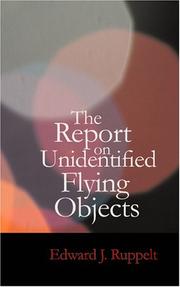
The Report on Unidentified Flying Objects
Book Excerpt: ing can never be positively identified. It might have been a hallucination or it might have been some vehicle from outer sp...
eBay marketplace picks
Marketplace Samples
Live-tested eBay searches with available results related to this page.
Selected fromflying saucer model oneBay.co.uk.
Endnotes
1.
Source: ised-isde.canada.ca
Title: Innovation Canada
Link:https://ised-isde.canada.ca/site/science/sites/default/files/documents/report-sky-canada-project.pdf
2.
Source: digitalcollections.trentu.ca
Title: Digital Collections
Link:https://digitalcollections.trentu.ca/_flysystem/fedora/2022-04/A_History_of_Canada_s_UFO_Investigation_1950_1995.pdf
3.
Source: dokumen.pub
Link:https://dokumen.pub/search-for-the-unknown-canadas-ufo-files-and-the-rise-of-conspiracy-theory-9780228012290.html
Source snippet
Summary Report,” 21 November 1953, uoa, ca on 0034 30-003-s1-ss2-f1, Project Second Storey Information and Spacecraft...Read more...
Published: November 1953
4.
Source: ised-isde.canada.ca
Link:https://ised-isde.canada.ca/site/science/en/office-chief-science-advisor/sky-canada-project/management-public-reporting-unidentified-aerial-phenomena-canada
5.
Source: science.gc.ca
Link:https://science.gc.ca/site/science/en/office-chief-science-advisor/sky-canada-project/management-public-reporting-unidentified-aerial-phenomena-canada
Source snippet
Reprint of Project Magnet Report file. X30-3, box 1126.1. University of Ottawa Archives, Ottawa, ON. Return to...Read more...
6.
Source: canada.ca
Title: ‘s UFOs: The search for the unknown
Link:https://www.canada.ca/en/library-archives/collection/research-help/science-technology/ufos.html
Source snippet
Canada's UFOs: The search for the unknown - Canada.ca...
7.
Source: ised-isde.canada.ca
Title: preview sky canada report ocsa
Link:https://ised-isde.canada.ca/site/science/en/office-chief-science-advisor/sky-canada-project/preview-sky-canada-report-ocsa
8.
Source: canada.ca
Link:https://www.canada.ca/en/security-intelligence-service/corporate/publications/the-foreign-fighters-phenomenon-and-related-security-trends-in-the-middle-east.html
9.
Source: canada.ca
Title: pitfalls and promises security implications of a post revolutionary middle east
Link:https://www.canada.ca/en/security-intelligence-service/corporate/publications/pitfalls-and-promises-security-implications-of-a-post-revolutionary-middle-east.html
10.
Source: canada.ca
Title: episode 054
Link:https://www.canada.ca/en/library-archives/collection/engage-learn/podcasts/discover/episode-054.html
11.
Source: canada.ca
Title: episode 053
Link:https://www.canada.ca/en/library-archives/collection/engage-learn/podcasts/discover/episode-053.html
12.
Source: canada.ca
Title: lilliput 2024
Link:https://www.canada.ca/en/environment-climate-change/services/species-risk-public-registry/cosewic-assessments-status-reports/lilliput-2024.html
13.
Source: canada.ca
Title: evaluation environment sustainability protection program
Link:https://www.canada.ca/en/department-national-defence/corporate/reports-publications/audit-evaluation/evaluation-environment-sustainability-protection-program.html
14.
Source: agriculture.canada.ca
Title: info source employee information
Link:https://agriculture.canada.ca/en/department/transparency/info-source-employee-information
15.
Source: canada.ca
Link:https://www.canada.ca/en/environment-climate-change/services/species-risk-public-registry/cosewic-assessments-status-reports/leiberg-fleabane-2016.html
16.
Source: inspection.canada.ca
Title: heat treatment evaluators
Link:https://inspection.canada.ca/en/plant-health/forestry/exports/ht-program/heat-treatment-evaluators
17.
Source: canada.ca
Link:https://www.canada.ca/en/environment-climate-change/services/species-risk-public-registry/cosewic-assessments-status-reports/olive-clubtail-2011.html
18.
Source: canada.ca
Link:https://www.canada.ca/en/women-gender-equality/gender-equality/better-world-activity/amlie.html
19.
Source: declassified.ca
Title: Project Second Storey
Link:https://declassified.ca/project-second-storey/
20.
Source: Wikipedia
Title: Project Second Storey
Link:https://en.wikipedia.org/wiki/Project_Second_Storey
Source snippet
Project Second StoreyIts main purpose was to collect, catalogue and correlate data from UFO sighting reports. The committee was dissol...
21.
Source: Wikipedia
Title: Peter Millman
Link:https://en.wikipedia.org/wiki/Peter_Millman
22.
Source: degruyterbrill.com
Link:https://www.degruyterbrill.com/document/doi/10.1515/9780228012290-005/pdf?licenseType=restricted&srsltid=AfmBOorff5F8fIdgI_ZjzJW_9yMI159p-eswAfOr7u7ZMyRVRlB6Ubwc
23.
Source: sites.google.com
Title: national research council
Link:https://sites.google.com/view/canadaufohistory/glossary/national-research-council
24.
Source: tranquileye.com
Title: project second storey
Link:https://www.tranquileye.com/truth/casebook/project_second_storey.html
Additional References
25.
Source: youtube.com
Link:https://www.youtube.com/watch?v=1WwGGuQljl4
Source snippet
Project Second Storey UFO Canada Project Second Storey (1952–1954): Canada’s Official UFO Investigation Explained Untold Archive...
26.
Source: youtube.com
Title: UFOs Part 1 — Canadian Reports, Research & Disclosure
Link:https://www.youtube.com/watch?v=CS2z-V6Qjsg
Source snippet
UFO's: Investigating the Unknown MEGA EPISODE | Secret Programs and Close Encounters...
27.
Source: arcs-atom.uottawa.ca
Link:https://arcs-atom.uottawa.ca/downloads/arthur-bray-fonds.pdf
Source snippet
Arcs AtomArthur Bray fonds (30-003)...
28.
Source: sacred-texts.com
Link:https://sacred-texts.com/ufo/canada.htm
29.
Source: artefacts-discovery.researcher.life
Link:https://artefacts-discovery.researcher.life/full_text/DA-2/bd/bd965c3cb0a533e4b425ccc910d45cf1/full_text/92d36db7b3e337010ac90198499e88d9.pdf
30.
Source: utppublishing.com
Link:https://utppublishing.com/doi/10.3138/jcs.2017-0028.r1
31.
Source: facebook.com
Title: it was at shirleys bay that wilbert smith assembled the canadian governments ufo
Link:https://www.facebook.com/HistoricalSocietyOttawa/posts/it-was-at-shirleys-bay-that-wilbert-smith-assembled-the-canadian-governments-ufo/1661434644063990/?locale=ar_AR
32.
Source: youtube.com
Title: Book explores UFOs in Canada
Link:https://www.youtube.com/watch?v=eMUmy3Ubcbw
Source snippet
UFOs Part 1 — Canadian Reports, Research & Disclosure...
33.
Source: youtube.com
Link:https://www.youtube.com/watch?v=YQvp4mDe9uI
Source snippet
What the Canadian government knows about UFOs...
34.
Source: youtube.com
Title: What the Canadian government knows about UFOs
Link:https://www.youtube.com/watch?v=ntyUWhbtcqM
Source snippet
Book explores UFOs in Canada...